Inspired by Bunthorne's logic puzzles, and by a recent real-life conversation with my kids, I offer the following. One parent (P) tells three children (A, B, and C) to empty the laundry hamper. The following conversation unfolds:
P: I do not know whether the laundry hamper is emptied.
A: I do not know whether the laundry hamper is emptied.
B: I do not know whether the laundry hamper is emptied.
C: I do not know whether the laundry hamper is emptied.
P: I now know whether the laundry hamper is emptied.
Thursday, December 18, 2008


Sunday, December 14, 2008
Rhetorical man
The Duck asked me to write something about how and why people use figures of speech without thinking about them. Of course, most people use figures of speech without knowing anything about rhetoric, and in fact rhetoric itself came about as a codification of what good speakers already did without studying rhetoric.
This touches on a subject of which I am woefully ignorant, namely—but let me unpack it slowly. Language itself is a thing of wonder. It stands at the interface between man’s immaterial and material sides as an artificial specification on the side of the imagination. Man naturally knows the world first through his senses, which inform his interior powers of imagination and memory, which in turn supply material to the powerful light of his immaterial intellect. At the point where the intellect gazes into the phantasm, where immaterial and material must work together, language intervenes as an instrument whereby reason can order the imagination and the imagination can better present itself to reason. Children who learn language undergo a mental revolution; reasoning and art and everything else we think of as special to man comes with language, precisely because language acts at the joint, so to speak, between what is unique to man and what he shares with the animals.
The written word normally signifies a spoken word, but even the spoken word is first the imagined word. Even when we are not speaking to others we often speak to ourselves, and even when we are not “hearing” words inside our heads our language is nonetheless organizing our thoughts. Deaf people can have true language without speech, because the word is in the imagination before it is in speech. But the imagined word itself is first the word understood—the intellectual word. Not only are concepts associated with particular signs, but our way of thinking about a thing then because the way of signifying of the sign; for example, our way of thinking about motion becomes the way of signifying of the verb, and our way of thinking about a substance becomes the way of signifying of a noun. Similarly, and as a result, logical relationships between our thoughts become grammatical relationships between our words, as when a verb takes a noun as its direct object.
All this is remarkable enough. Our words become incarnate, so to speak; the immaterial clothes itself in the material, imposes meaning and order, and by so doing it transforms our material brains in a marvelous and documentable way. But something further happens at the same time.
Beyond what reason imposes, there seems to be already an analogy between material and immaterial things that language can seize onto. Many words that all have similar consonants create a sense of unity about a sentence, and so convey the impression of thoughts that hang together. The balance of parallel phrases persuades us that the thought behind them is beautifully structured. Ending an essay with the same words and phrases that began the essay creates an impression of completion even when no real completion has happened. Just as a straight line really is like “linear” thinking in some analogous way, rhetorically powerful speech really is like powerful thought—again, in some analogous way.
Because language itself occurs at the very interface between immaterial and immaterial, it was inevitable that this analogous relationship between the two would come out in language. Without reflection, grammatical man became rhetorical man—or rather, the two came into being simultaneously as linguistic man—or rather, man came to be man.
That at least is my own reflection on what happens all the time all around us. But as I say, this is a realm of marvels even for the true philosopher, much less for an ignoramus like the present author.
This touches on a subject of which I am woefully ignorant, namely—but let me unpack it slowly. Language itself is a thing of wonder. It stands at the interface between man’s immaterial and material sides as an artificial specification on the side of the imagination. Man naturally knows the world first through his senses, which inform his interior powers of imagination and memory, which in turn supply material to the powerful light of his immaterial intellect. At the point where the intellect gazes into the phantasm, where immaterial and material must work together, language intervenes as an instrument whereby reason can order the imagination and the imagination can better present itself to reason. Children who learn language undergo a mental revolution; reasoning and art and everything else we think of as special to man comes with language, precisely because language acts at the joint, so to speak, between what is unique to man and what he shares with the animals.
The written word normally signifies a spoken word, but even the spoken word is first the imagined word. Even when we are not speaking to others we often speak to ourselves, and even when we are not “hearing” words inside our heads our language is nonetheless organizing our thoughts. Deaf people can have true language without speech, because the word is in the imagination before it is in speech. But the imagined word itself is first the word understood—the intellectual word. Not only are concepts associated with particular signs, but our way of thinking about a thing then because the way of signifying of the sign; for example, our way of thinking about motion becomes the way of signifying of the verb, and our way of thinking about a substance becomes the way of signifying of a noun. Similarly, and as a result, logical relationships between our thoughts become grammatical relationships between our words, as when a verb takes a noun as its direct object.
All this is remarkable enough. Our words become incarnate, so to speak; the immaterial clothes itself in the material, imposes meaning and order, and by so doing it transforms our material brains in a marvelous and documentable way. But something further happens at the same time.
Beyond what reason imposes, there seems to be already an analogy between material and immaterial things that language can seize onto. Many words that all have similar consonants create a sense of unity about a sentence, and so convey the impression of thoughts that hang together. The balance of parallel phrases persuades us that the thought behind them is beautifully structured. Ending an essay with the same words and phrases that began the essay creates an impression of completion even when no real completion has happened. Just as a straight line really is like “linear” thinking in some analogous way, rhetorically powerful speech really is like powerful thought—again, in some analogous way.
Because language itself occurs at the very interface between immaterial and immaterial, it was inevitable that this analogous relationship between the two would come out in language. Without reflection, grammatical man became rhetorical man—or rather, the two came into being simultaneously as linguistic man—or rather, man came to be man.
That at least is my own reflection on what happens all the time all around us. But as I say, this is a realm of marvels even for the true philosopher, much less for an ignoramus like the present author.
Saturday, November 29, 2008
Philistine Perfection
When a Wal-Mart employee was trampled to death yesterday by Black Friday deal hunters, the nation was rightly outraged. The crowd, impatient from waiting all night in the parking lot, broke the doors down, flattened several employees in the process, and walked over them until one was dead. When police tried to clear the store, shoppers shouted angrily, "But I waited all night to get in!"--and kept on shopping.
But we should keep in mind that this was not only predictable, but planned. For several generations now Ray Moose has carefully and consciously designed advertisements to bypass reason; with the consent of all parties involved, companies have knowingly worked to cause customers to make decisions without thought, and even to induce a psychological need for their products. This is not a secret plot, but the open strategy one can find in any textbook on effective advertising. We the customers have enjoyed our titillation.
When the art of advertising was in its infancy and working on a previously unaffected populace, the best companies could manage was to induce imprudent purchases of unnecessary items, or an irrational decision in favor of one brand name over another. But now that the art has reached maturity, with the aid of television, Internet, and other media, and now that the populace has grown up already formed by advertisement, we can spark a real state of insanity that lasts for a number of hours. This is not a byproduct, but the goal.
In the dark old days of yesteryear, ignorant barbarians practiced black magic in the woods and sacrificed children for fertile fields. In the gloaming of culture, when barbarity is no longer suffered but sought, the Philistines celebrate Black Friday on the asphalt and sacrifice human life for a Nintendo Wii. There is here a kind of perfection.
But we should keep in mind that this was not only predictable, but planned. For several generations now Ray Moose has carefully and consciously designed advertisements to bypass reason; with the consent of all parties involved, companies have knowingly worked to cause customers to make decisions without thought, and even to induce a psychological need for their products. This is not a secret plot, but the open strategy one can find in any textbook on effective advertising. We the customers have enjoyed our titillation.
When the art of advertising was in its infancy and working on a previously unaffected populace, the best companies could manage was to induce imprudent purchases of unnecessary items, or an irrational decision in favor of one brand name over another. But now that the art has reached maturity, with the aid of television, Internet, and other media, and now that the populace has grown up already formed by advertisement, we can spark a real state of insanity that lasts for a number of hours. This is not a byproduct, but the goal.
In the dark old days of yesteryear, ignorant barbarians practiced black magic in the woods and sacrificed children for fertile fields. In the gloaming of culture, when barbarity is no longer suffered but sought, the Philistines celebrate Black Friday on the asphalt and sacrifice human life for a Nintendo Wii. There is here a kind of perfection.
Monday, November 24, 2008
The Disenfranchised Among Us
Bunthorne has modestly proposed that folks with children vote not only for themselves, but also for their children. His reasoning is hard to counter: not only are children otherwise unrepresented and thus unable to exert a governmental influence equivalent to their percentage of the population, but adults with children have a greater stake in governmental policy (and how that policy affects the common good) than do adults without children.
To these points, one might add that the choice not to have children is often a selfish one, an attempt to retain all the fun of life for the me-monster. Conversely, the choice to have children is often a selfless one, a choice for generosity. It seems only fitting that the choice most often characterized by self concern have less influence on the common good than the choice that is most often characterized by concern for the common good over self.
Some may object that this would give less voting power to those who wish to have children and cannot. On the one hand, this doesn't touch Bunthorne's original arguments; on the other hand, these people can adopt if they feel the need for more voting power. And if I had three hands, I would add on the third one that those wishing but unable to have children will generally agree on policy with those wishing and able to have children, so Bunthorne's proposal is overall in the favor of all in favor of children.
Ironically, the strongest opponents of Bunthorne's proposal would probably be advocates of children's rights. They would perceive this attempt to give children a vote as a veiled return to the supremacy of parents over children. As the Moose once said to a friend of mine: "Obedience is the root of all evil."
To these points, one might add that the choice not to have children is often a selfish one, an attempt to retain all the fun of life for the me-monster. Conversely, the choice to have children is often a selfless one, a choice for generosity. It seems only fitting that the choice most often characterized by self concern have less influence on the common good than the choice that is most often characterized by concern for the common good over self.
Some may object that this would give less voting power to those who wish to have children and cannot. On the one hand, this doesn't touch Bunthorne's original arguments; on the other hand, these people can adopt if they feel the need for more voting power. And if I had three hands, I would add on the third one that those wishing but unable to have children will generally agree on policy with those wishing and able to have children, so Bunthorne's proposal is overall in the favor of all in favor of children.
Ironically, the strongest opponents of Bunthorne's proposal would probably be advocates of children's rights. They would perceive this attempt to give children a vote as a veiled return to the supremacy of parents over children. As the Moose once said to a friend of mine: "Obedience is the root of all evil."
Wednesday, November 19, 2008
From the Moose's mouth
Yesterday belief.net published the full and unedited text of a famous interview with Barack Obama about his religious beliefs. It's worth reading in full, but the heart of it is here:
Obama's take on Jesus Christ is the second most interesting point in the interview. It fits precisely within the boundaries of orthodox Tolerationism, and locates our president-elect within the debate over who is and isn't a real Christian:
I'm a big believer in tolerance. I think that religion at it's best comes with a big dose of doubt. I'm suspicious of too much certainty in the pursuit of understanding just because I think people are limited in their understanding.Obama is a straight-laced, orthodox Tolerationist. Anyone teaching through Ratzinger's Truth and Tolerance should assign Obama's interview for a class discussion. Come to think of it, anyone discussing Obama's religious views should read Ratzinger's Truth and Tolerance, which exposes the roots and the fruits of the tyrrany of tolerance. Under the banner of unity, which you will recall was the rallying cry of Obama's campaign, the "virtue of tolerance" bans the only possible basis of unity: truth.I think that, particularly as somebody who's now in the public realm and is a student of what brings people together and what drives them apart, there's an enormous amount of damage done around the world in the name of religion and certainty.
Obama's take on Jesus Christ is the second most interesting point in the interview. It fits precisely within the boundaries of orthodox Tolerationism, and locates our president-elect within the debate over who is and isn't a real Christian:
FALSANI:Who's Jesus to you?
(He laughs nervously)
OBAMA:
Right.Jesus is an historical figure for me, and he's also a bridge between God and man, in the Christian faith, and one that I think is powerful precisely because he serves as that means of us reaching something higher.
And he's also a wonderful teacher. I think it's important for all of us, of whatever faith, to have teachers in the flesh and also teachers in history.
Wednesday, November 05, 2008
Hope is not a program
Just a reminder for all of us out there burnt out and depressed today. As Christians, we believe on faith that things are going to get worse before they get better. God has not assured us that truth and goodness will slowly ascend to victory over time; quite the contrary, Scripture tells us at every turn that evil will win, and win more, and finally reach its hour of triumph before our God intervenes suddenly and supernaturally.
For our children, we hope that the ascendancy of evil will not be in our day. For our neighbors' salvation, we hope that truth will not be discredited in the eyes of all. For ourselves perhaps, we hope that our legacy will be the good we accomplished in our lives.
But as for the course of the world, we do not hope that we will achieve the victory of good. We will fail in every measurable way. The hope that Obama proclaims is not finally our hope; at best he proclaims hope for a time and a season.
Our hope is not a program.
Our hope is in God, the master of history, who has brought Obama to the presidency; our hope is in the root of all being, who turns the heart of the worlds' leaders wherever he wills; our hope is a final hope, that seems so distant but closes around us with each death of someone we loved; our hope is hope not for America, not for prosperity, not for equal rights, not for just wages, but for the attainment of the goal towards which all of history strives. And this hope will be achieved by a force from outside the flow of history.
For our children, we hope that the ascendancy of evil will not be in our day. For our neighbors' salvation, we hope that truth will not be discredited in the eyes of all. For ourselves perhaps, we hope that our legacy will be the good we accomplished in our lives.
But as for the course of the world, we do not hope that we will achieve the victory of good. We will fail in every measurable way. The hope that Obama proclaims is not finally our hope; at best he proclaims hope for a time and a season.
Our hope is not a program.
Our hope is in God, the master of history, who has brought Obama to the presidency; our hope is in the root of all being, who turns the heart of the worlds' leaders wherever he wills; our hope is a final hope, that seems so distant but closes around us with each death of someone we loved; our hope is hope not for America, not for prosperity, not for equal rights, not for just wages, but for the attainment of the goal towards which all of history strives. And this hope will be achieved by a force from outside the flow of history.
Tuesday, November 04, 2008
This just in: Ray Moose elected President!
It would appear to be final, since McCain has made his concession speech. The scary thing is not that Obama is president, but that we live in a country that voted for Obama.
How could it be that a man whose politics are to the left of everyone in the country and whose list of achievements fits on the back of his business card is not only elected, but considered to be the best thing since the i-pod? For my money, it's because we are a TV nation. The television trains viewers not to think seriously about anything, and so leads naturally to modern advertising, wherein a smiling and beautiful woman sitting in a car means that you must buy one (the car, that is). Similarly, a smiling and handsome man with a sonorous voice and an attractive theme about change and hope means you must elect him--serious content would actually be detrimental, distracting, like making arguments in your seventeen seconds of air time.
Just smile and look beautiful. The viewers have been trained not to think.
Think of it this way. If you were a social science researcher and you wanted to find out how Americans have been trained to make decisions by their communication technologies, would it not be your dream to conduct a nation-wide test with participants in every town? Well, the dream has become a reality, and the results are depressing, if predictable: Americans make decisions based on loose poetic associations of images and sound bytes.
The good news is that irrationality bites any hand, whether it holds a bone or not. McCain did well on the campaign trail until America formed the following "syllogism": an economic crisis happened after George Bush had been president for nearly eight years; the president in office is responsible for whatever may happen to the economy; therefore, Republicans have to go. Well, the Democrats gained seats in both the house and the senate, and their boy Ray will sit in the oval office. Every single problem that rears its ugly head in the next four years will land fairly and squarely in the Democratic lap, and Ray may find his nation of well-trained unthinkers turning "red" with anger.
Dum spiro, spero.
How could it be that a man whose politics are to the left of everyone in the country and whose list of achievements fits on the back of his business card is not only elected, but considered to be the best thing since the i-pod? For my money, it's because we are a TV nation. The television trains viewers not to think seriously about anything, and so leads naturally to modern advertising, wherein a smiling and beautiful woman sitting in a car means that you must buy one (the car, that is). Similarly, a smiling and handsome man with a sonorous voice and an attractive theme about change and hope means you must elect him--serious content would actually be detrimental, distracting, like making arguments in your seventeen seconds of air time.
Just smile and look beautiful. The viewers have been trained not to think.
Think of it this way. If you were a social science researcher and you wanted to find out how Americans have been trained to make decisions by their communication technologies, would it not be your dream to conduct a nation-wide test with participants in every town? Well, the dream has become a reality, and the results are depressing, if predictable: Americans make decisions based on loose poetic associations of images and sound bytes.
The good news is that irrationality bites any hand, whether it holds a bone or not. McCain did well on the campaign trail until America formed the following "syllogism": an economic crisis happened after George Bush had been president for nearly eight years; the president in office is responsible for whatever may happen to the economy; therefore, Republicans have to go. Well, the Democrats gained seats in both the house and the senate, and their boy Ray will sit in the oval office. Every single problem that rears its ugly head in the next four years will land fairly and squarely in the Democratic lap, and Ray may find his nation of well-trained unthinkers turning "red" with anger.
Dum spiro, spero.
Wednesday, October 29, 2008
A hopeful view of hope
With the election only days away, every blogger, now matter how unqualified, must record his or her thoughts on the candidates. Since an Obama victory seems likely, I would like to offer an optimistic take on what will happen if the candidate of change and hope takes the oval office.
My guess is that he will not lead effectively, because he has no record of leading effectively. In the past, he has been controlled by the far left edge of the Democratic agenda, and that will probably remain true. So he will boldly and prophetically enact any number of hair-raisingly bad laws and policies, aided and indeed directed by his democratic congress. The age of entitlement will begin.
As liberal as Americans are, we are not as a group ready for socialism quite yet, so too much too fast may cause the frog to jump out of the water. Voters will be horrified by the extremism of the far left, and we will get a "swing effect" at the next election, to the benefit--God willing--of someone more insightful than John McCain. This swing effect will be augmented by the fact that the Democrats will controll the entire federal government for four years, and so every problem that arises within the four years will be perceived by voters as the Democrats' fault, whether or not the accusation is fair.
But will damage done by four years of Obama outweight the good of Democratic implosion? That depends almost entirely on the republican candidate four years from now: if we get a dynamic and principled leader, then he will use the momentum of the swing to undo the wreckage and even improve the nation; if we get a politician-at-heart figurehead whose virtue is a lack of vice, then we will be one step further down the road to serfdom.
My guess is that he will not lead effectively, because he has no record of leading effectively. In the past, he has been controlled by the far left edge of the Democratic agenda, and that will probably remain true. So he will boldly and prophetically enact any number of hair-raisingly bad laws and policies, aided and indeed directed by his democratic congress. The age of entitlement will begin.
As liberal as Americans are, we are not as a group ready for socialism quite yet, so too much too fast may cause the frog to jump out of the water. Voters will be horrified by the extremism of the far left, and we will get a "swing effect" at the next election, to the benefit--God willing--of someone more insightful than John McCain. This swing effect will be augmented by the fact that the Democrats will controll the entire federal government for four years, and so every problem that arises within the four years will be perceived by voters as the Democrats' fault, whether or not the accusation is fair.
But will damage done by four years of Obama outweight the good of Democratic implosion? That depends almost entirely on the republican candidate four years from now: if we get a dynamic and principled leader, then he will use the momentum of the swing to undo the wreckage and even improve the nation; if we get a politician-at-heart figurehead whose virtue is a lack of vice, then we will be one step further down the road to serfdom.
Saturday, October 25, 2008
If a car were assembled by chance....
Bunthorne posted some interesting thoughts about natural teleology. I posted a long response on his blog, but then realized that I had essentially written my own blog post about natural ordering towards an end. It surrounds the question of whether a car assembled by chance would have a natural ordering towards an end.
I would say not. If a car came to be by random processes, what it would have is an order, but not an order to an end; or perhaps I should say that it would have an order towards a motion, but not an order towards an end, if that makes any sense at all.
I have two reasons for saying this.
First, only a mind can intend the good, and so only a mind can make an ordering towards an end. This is the foundation of Thomas’s 5th way. If no mind made the car, it would have a foundation for order towards an end–namely order–but it would not have actual ordering towards an end.
Second, a car is not a single substance and so does not have a good. The motion towards which the car has an order is not a good for the car, and so someone else whose good it is has to enter into the equation before the car’s motion can be considered an end.
Folks like Searle thing of a plant as like a car, that is, as a multitude of substances rather than as a single substance. Because of this, they do not think of the plant as having a good. Because of this, they do not think of the plant’s order towards a motion as ordering towards a good. Because of this, they do not perceive that a mind must stand behind the plant. Because of this, they fail to perceive the existence of God.
(Perhaps that last paragraph was overly ambitious, but it was rhetorically pleasing, so I did it.)
The reason people think of plants as multiple substances is because of a trick of the imagination. Everything we think of a part–part of a plant, part of a human, part of anything else–we imagine it, and our imaginations necessarily present that part to us as though it were a whole. Then we think of the parts of the parts as though they were wholes, and the cycle never ends. There is no ultimate substance for the imagination.
I forgot the name....
OK, the figure in that last post was supposed to reside in the line "Nothing says nothing like nothing", i.e., in the use of the word "nothing" in more than one sense, but I forgot the name for the figure. That's what I get for taking so long to post again!
Friday, October 10, 2008
Much ado about nothing
Turning again to the American Heritage Dictionary, we learn that a noun is "The part of speech that is used to name a person, place, thing, quality, or action and can function as the subject or object of a verb, the object of a preposition, or an appositive."
This definition seems complete at first glance; everything fits under one of the categories "person, place, thing, quality, or action", and nothing falls outside of them. This is good. The problem is that nothing does fall outside of those categories, and the same dictionary classifies "nothing" as a noun! The whole point of a word like "nothing" is to name "no thing", to name no person, place, quality or action.
One final riddle for the dictionary people. Nothing says nothing like "no-thing". But if a word says nothing at all, how can it even be a word?
This definition seems complete at first glance; everything fits under one of the categories "person, place, thing, quality, or action", and nothing falls outside of them. This is good. The problem is that nothing does fall outside of those categories, and the same dictionary classifies "nothing" as a noun! The whole point of a word like "nothing" is to name "no thing", to name no person, place, quality or action.
One final riddle for the dictionary people. Nothing says nothing like "no-thing". But if a word says nothing at all, how can it even be a word?
Tuesday, October 07, 2008
Cutting it short
To get directly to the point: the figure for last post was diacope, Greek for "cutting through", meaning repetition with only a word or two between: "nonsense, sheer, utter nonsense...."
My guest and I drained a bottle of wine over good conversation tonight. On the one hand, the wine was "The 7 Deadly Zins"; on the other hand, my guest was a priest, so it all balanced out. Between the wine and the priest, time has slipped away for writing even the briefest, the most useless and the briefest of posts.
My guest and I drained a bottle of wine over good conversation tonight. On the one hand, the wine was "The 7 Deadly Zins"; on the other hand, my guest was a priest, so it all balanced out. Between the wine and the priest, time has slipped away for writing even the briefest, the most useless and the briefest of posts.
Monday, October 06, 2008
Useless verbage
As I attempt to resurrect this blog and its project, I realize that I need to focus on what is (a) useless and (b) short. Otherwise I will not post at this season in my life, which is fall heading into winter but still recovering from summer with a touch of spring fever.
Today's utterly useless fact: according to the American Heritage Dictionary, a verb is "the part of speech that expresses existence, action, or occurrence in most languages."
This is nonsense, sheer, brazen nonsense. "Existence", "action", and "occurence" are all nouns! Clearly, words that express existence, action, or occurence are not thereby verbs.
Today's utterly useless fact: according to the American Heritage Dictionary, a verb is "the part of speech that expresses existence, action, or occurrence in most languages."
This is nonsense, sheer, brazen nonsense. "Existence", "action", and "occurence" are all nouns! Clearly, words that express existence, action, or occurence are not thereby verbs.
Sunday, October 05, 2008
Can you mix regulation with anti-regulation, captain?
It's a great time to know nothing about economics. Everyone who knows something about economics seems to lose sleep, sell all their stocks, and write long, grouchy blog posts about who is to blame.
What puzzles me most, in the abyss of my ignorance, are the accusations that John McCain is anti-regulatory and therefore represents what caused the current catastrophe. Setting aside the facts of the case, I wish one of my more intelligent readers could tell me what the accusation means. As far I can tell, the central lack of regulation behind the crisis (leaving aside the Fannie Mae and Fannie Mac issues as well as American's general lack of self-regulation) was that rating agencies were allowed to sign off on junk. I recently read an article explaining how the rating agencies would actually take fees in return for tips on how to artificially inflate the rating of a bad investment! (But I can't find the link now.)
Outlawing that kind of thing is surely a kind of regulation we could all agree on, right? That lying is always bad, that is, and especially so in financial transactions?
My question: What kind of regulation is John McCain against that makes him so bad? Research into his voting record doesn't seem to turn up an answer.
What puzzles me most, in the abyss of my ignorance, are the accusations that John McCain is anti-regulatory and therefore represents what caused the current catastrophe. Setting aside the facts of the case, I wish one of my more intelligent readers could tell me what the accusation means. As far I can tell, the central lack of regulation behind the crisis (leaving aside the Fannie Mae and Fannie Mac issues as well as American's general lack of self-regulation) was that rating agencies were allowed to sign off on junk. I recently read an article explaining how the rating agencies would actually take fees in return for tips on how to artificially inflate the rating of a bad investment! (But I can't find the link now.)
Outlawing that kind of thing is surely a kind of regulation we could all agree on, right? That lying is always bad, that is, and especially so in financial transactions?
My question: What kind of regulation is John McCain against that makes him so bad? Research into his voting record doesn't seem to turn up an answer.
Tuesday, July 29, 2008
Not so bad, the dentist
We all know how dentists amuse themselves. They stuff our mouths full of metal rods and whirring things and then play twenty questions: "How ya' been? Your kids playing ball this year?" We gape and say "Ah hah. Hah uh hah uh wah wah." Very funny.
But dental humor will have to take a silver medal in this competition. The funniest sounds come from the chiropractor's office.
My chiropractor has me lay face down on the table so that I'm talking into a crack; everything I say sounds like it comes through a toilet paper tube. Then he runs a vibrating massage machine over my back and asks me how my kids are enjoying Wyoming. "THeEeYy lLiIkKeE IiTt aAaAa lLlOoOTtT", I say. Sounds like I'm talking through a fan. Somehow he keeps a straight face, but of course he has already tipped off the receptionist: "Jenny Mae, slip over by the door while I work this next guy over; don't let him know you're there, but you gotta hear this! Sounds like he's talking through a fan!"
The machine off, we proceed to the manipulation. "Did ja do anything fun this weekend?", he asks, and just as I draw in my breath to answer he CRUSHES the spinal column between my shoulder blades. "I daioughargh!", I comment. "Is the heat getting to you?", he wonders--CRUSH, CRUSH, CRUSH.
Rarely have I felt so silly. Not so bad, the dentist!
But dental humor will have to take a silver medal in this competition. The funniest sounds come from the chiropractor's office.
My chiropractor has me lay face down on the table so that I'm talking into a crack; everything I say sounds like it comes through a toilet paper tube. Then he runs a vibrating massage machine over my back and asks me how my kids are enjoying Wyoming. "THeEeYy lLiIkKeE IiTt aAaAa lLlOoOTtT", I say. Sounds like I'm talking through a fan. Somehow he keeps a straight face, but of course he has already tipped off the receptionist: "Jenny Mae, slip over by the door while I work this next guy over; don't let him know you're there, but you gotta hear this! Sounds like he's talking through a fan!"
The machine off, we proceed to the manipulation. "Did ja do anything fun this weekend?", he asks, and just as I draw in my breath to answer he CRUSHES the spinal column between my shoulder blades. "I daioughargh!", I comment. "Is the heat getting to you?", he wonders--CRUSH, CRUSH, CRUSH.
Rarely have I felt so silly. Not so bad, the dentist!
Friday, July 25, 2008
Beating around the phrase-bush
My book of figures showed itself this afternoon. As I cast about for today's turn of phrase, my eye fell on periphrasis:
Maybe the Duck can tell me the name for a one-word periphrasis, where you use a much bigger word than is needed. The plague in this category is "utilize". I have never heard a case where it could not be replaced with "use"; people just want to utilize bigger words to sound importantatious.
In theory, of course, "utilize" could mean "make useful", as "sterilize" means "make sterile". That is the dictionary definition, but in the common and usual circumstances of every day locution the item or term in question is periphrastisized for maximal utilization of vocabulary and linguistic resources.
No sooner did I pick up my own employer's Bureaucracy Handbook than my eye fell on a delicious example of the above. As soon as I had my eye popped back into place, I read the following aloud to anyone who would listen:
We are all too familiar with this particular mode. We live in a world in which the killing of a spy is the elimination with extreme prejudice of an intelligence-gathering operative. And in this world we secretly think that if all periphrasis could be eliminated, bereaucracy would wither away, along with its academic handmaidens, the social sciences. We needed to be reminded, therefore, that legitimate uses of periphrasis do exist (such as substituting "academic handmaidens of bureaucracy" for "social sciences" in order to contribute to their elimination with extreme prejudice).
If "engage in teaching" means anything more than "teach", it implies that the teaching motor is always humming. Sometimes we just let it hum while we do other things, but sometimes we drop it into gear and engage that source of power. I knew a fellow once who walked into a classroom and carelessly dropped his teaching directly into fourth gear; he nearly plastered himself across the whiteboard. Be careful when you engage your teaching: that thing's not a toy!
"Faculty" refers to those who engage in teaching during the school year and activities directly related thereunto.
Maybe the Duck can tell me the name for a one-word periphrasis, where you use a much bigger word than is needed. The plague in this category is "utilize". I have never heard a case where it could not be replaced with "use"; people just want to utilize bigger words to sound importantatious.
In theory, of course, "utilize" could mean "make useful", as "sterilize" means "make sterile". That is the dictionary definition, but in the common and usual circumstances of every day locution the item or term in question is periphrastisized for maximal utilization of vocabulary and linguistic resources.
Thursday, July 24, 2008
Fun with the news
The book of rhetorical figures used for my ongoing "figures of speech" project is still hiding in a box. Multiple search sessions have not unearthed it, so for the moment that project is on hold--deep apologies.
However, we can always appreciate the figures around us. In an otherwise unfortunate news piece, an anonymous journalist had a little fun with words, breaking the rule that good journalism requires bad prose:
It also makes me think of the Duck.
However, we can always appreciate the figures around us. In an otherwise unfortunate news piece, an anonymous journalist had a little fun with words, breaking the rule that good journalism requires bad prose:
Bale, who was in the UK to promote the new Batman film and attend its London premiere, is on bail until September pending further inquiries.That makes me happy.
It also makes me think of the Duck.
Wednesday, July 16, 2008
I may be an Ignoramus, but please don't treat me like one.
My cable internet connection went on the blink, so I called the company. To my distress, a computer answered the telephone and starting asking questions and giving orders. My situation adequately described by a series of "Yes" and "No" entries, the computer asked: "Do you want to wait to speak to a representative or do you want to fix the problem?"
Well, when you put it that way....
My acquiescence registered via voice recognition software, the computer explained: "Fixing the problem will require four steps. Do you have something to write down the steps?"
I scrambled to open a Word doc and mouthed my affirmative.
"Alright. You will have a chance to hear each step again after I explain it. First, locate the power supply to your cable modem and unplug it. Then plug it back in." The computer paused to let me write this out, and then queried, "Do you want me to repeat that?"
No, I got it--unplug and replug the modem.
"The second step is, locate the power supply to your wireless router and unplug it. Then plug it back in." Again the computer paused to let this sink in, and queried again, "Do you want me to repeat that?"
No, I can handle that--unplug the router and plug it back in.
"The third step is, shut down your computer." A third time the computer paused so my slower CPU chip could catch up, and asked cheerfully, "Do you want me to repeat that?"
Aarg! No!
"The fourth step is, turn your computer back on." Again a pause, and I twitched as the computer inquired yet a fourth time, "Do you want me to repeat that?"
Never in all my days. First it insinuates quite plainly that human representatives are useless, and then it spoon feeds me "Turn everything off and restart it" in four steps, insulting my comprehension at every opportunity! They say that when computers get artificial intelligence and take over the world, we'll be lucky if they decide to keep us as pets--but right now I belong to the master race, ignoramus or no, and I'd appreciate it if cocky answering machines on steroids would keep that in "mind".
The Moose is behind all this, I just know it. He got us thinking of computers as humans so that we would get used to thinking of humans as computers. Once we compare ourselves as computers to the computers that are actually computers, we can't compete; we can't calculate as fast or conclude with such freedom from error or store such vast quantities of data. This proves (whispers the Moose through every automated genie or wizard) that we are inferior. Therefore we should step back and let our technologies rule the world in our stead.
Welcome to Technopoly.
Well, when you put it that way....
My acquiescence registered via voice recognition software, the computer explained: "Fixing the problem will require four steps. Do you have something to write down the steps?"
I scrambled to open a Word doc and mouthed my affirmative.
"Alright. You will have a chance to hear each step again after I explain it. First, locate the power supply to your cable modem and unplug it. Then plug it back in." The computer paused to let me write this out, and then queried, "Do you want me to repeat that?"
No, I got it--unplug and replug the modem.
"The second step is, locate the power supply to your wireless router and unplug it. Then plug it back in." Again the computer paused to let this sink in, and queried again, "Do you want me to repeat that?"
No, I can handle that--unplug the router and plug it back in.
"The third step is, shut down your computer." A third time the computer paused so my slower CPU chip could catch up, and asked cheerfully, "Do you want me to repeat that?"
Aarg! No!
"The fourth step is, turn your computer back on." Again a pause, and I twitched as the computer inquired yet a fourth time, "Do you want me to repeat that?"
Never in all my days. First it insinuates quite plainly that human representatives are useless, and then it spoon feeds me "Turn everything off and restart it" in four steps, insulting my comprehension at every opportunity! They say that when computers get artificial intelligence and take over the world, we'll be lucky if they decide to keep us as pets--but right now I belong to the master race, ignoramus or no, and I'd appreciate it if cocky answering machines on steroids would keep that in "mind".
The Moose is behind all this, I just know it. He got us thinking of computers as humans so that we would get used to thinking of humans as computers. Once we compare ourselves as computers to the computers that are actually computers, we can't compete; we can't calculate as fast or conclude with such freedom from error or store such vast quantities of data. This proves (whispers the Moose through every automated genie or wizard) that we are inferior. Therefore we should step back and let our technologies rule the world in our stead.
Welcome to Technopoly.
Monday, July 14, 2008
Why can't we all just get along....
One of Ray's early efforts, the hippy movement, was rotten in many ways--a juvenile piece he threw together, not really his mature stuff--but I like a lot about it. I like the back to nature craze, the joyful attitude, and the desire to build a society based on love and unselfishness.
More on the downsides in an upcoming post, but for the moment I just want to point out the major flaw in any plan for building a society based on love and unselfishness: lots of people are hateful and selfish. Read history.
But now the Moose has let loose his masterstroke: Barack Obama, the man who means to deliver on that society the hippy movement could only talk about. And in fact he does have a strange effect on people.
Take for example John Talbott. While his prophetic works in economics earn the praise of the toughest critic, he has also written a book called Obamanomics. Here's the blurb:
 lso that this new system will work because we will all get along and be unselfish. Note finally the reason we will be so transformed: Obama's "ability to bring the country together." In other words, Obamanomics works because each American accepts Barack Obama into his heart as his personal president and leader.
More on the downsides in an upcoming post, but for the moment I just want to point out the major flaw in any plan for building a society based on love and unselfishness: lots of people are hateful and selfish. Read history.
But now the Moose has let loose his masterstroke: Barack Obama, the man who means to deliver on that society the hippy movement could only talk about. And in fact he does have a strange effect on people.
Take for example John Talbott. While his prophetic works in economics earn the praise of the toughest critic, he has also written a book called Obamanomics. Here's the blurb:
Obama's greatest strength is his ability to bring the country together. For too long divisions among races, religions, political views, cultures, genders, and sexual preferences have prevented Americans from coming together to solve the most important problems of our generation. Global warming, lobbying reform, poverty, health care, wars, terrorism, education, housing and banking reform, and energy and water shortages-these are complex global problems that Talbott argues cannot be left to the free market business world or governments to solve.Notice that poverty, illness, and war will be cured by this new economics. Note aOnce emphasis is placed on citizen involvement, real solutions become apparent to our most pressing problems. A completely laissez-faire world of unregulated markets and uncontrolled globalization can be returned to a properly regulated free market that responds to the voice of a democratic people. And the American values of goodness, justice, and fairness to all Americans reflected in this young man of Africa and Kansas can once again be incorporated into our economic and financial system.
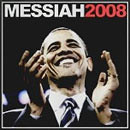 lso that this new system will work because we will all get along and be unselfish. Note finally the reason we will be so transformed: Obama's "ability to bring the country together." In other words, Obamanomics works because each American accepts Barack Obama into his heart as his personal president and leader.
Subscribe to:
Posts (Atom)